Blackjack Splits and Their Role in Tournament Progression and Reward Benchmarks
Olivia Koch · Jul 19, 2026

Blackjack Splits and Their Role in Tournament Progression and Reward Benchmarks
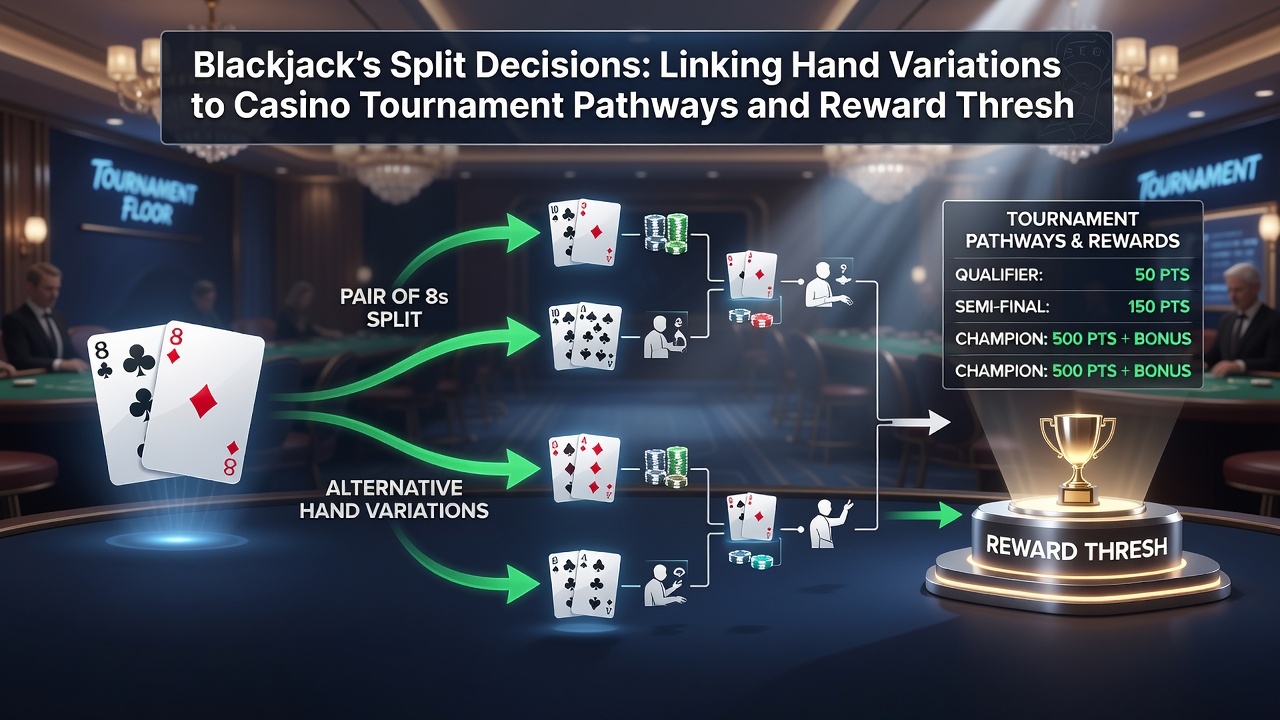
Blackjack splitting allows players to divide paired cards into separate hands while placing an additional wager equal to the original bet, and this mechanic creates direct connections to advancement in casino tournaments along with specific reward thresholds that operators establish for participants. Tournament formats often track cumulative chip totals or points derived from individual hand outcomes, so decisions on when to split pairs such as aces or eights influence overall standings and eligibility for progression stages.
Core Mechanics of Splitting in Standard Play
Rules for splitting vary by venue yet typically permit one split per pair with some locations allowing resplits up to three or four times, and players who encounter pairs of aces receive just one additional card per new hand under most procedures. Data from regulatory reports indicates that splitting tens occurs infrequently because the resulting hands carry lower expected values compared to standing on twenty, whereas pairs of twos or threes gain value when split against dealer upcards from four through seven. These choices accumulate across multiple rounds and feed directly into tournament scoring systems that award points based on net chip gains rather than isolated wins.
Tournament Structures and Hand Variation Impacts
Casino events frequently organize participants into brackets where survival depends on reaching designated chip thresholds at set intervals, and splitting decisions alter the variance of results in ways that either stabilize positions or accelerate climbs toward those markers. Observers note that aggressive splitting on low pairs during early rounds can generate larger swings which either propel entrants past qualification lines or eliminate them when sequences turn negative. Research from academic studies on probability modeling shows that optimal splitting charts adjust slightly in tournament settings because survival pressure outweighs pure expected value calculations used in cash games.
Pathways Through Different Tournament Formats
Single-table sit-and-go events compress decision windows so each split carries heightened weight toward final payouts, while multi-table progressive tournaments extend play across hours and reward consistent application of splitting rules that maximize long-term accumulation. Industry analyses from the Nevada Gaming Control Board reveal participation growth in blackjack tournaments where operators publish leaderboards updated after every round, making visible how split outcomes shift rankings in real time. Those who reach later stages often cite repeated splitting on favorable matchups as a factor in crossing intermediate reward thresholds that unlock additional buy-ins or satellite entries.
Reward Thresholds and Bonus Integration
Operators set reward milestones at specific point totals or chip counts that trigger cash prizes, loyalty credits, or entry into higher-tier events, and splitting strategies contribute measurable edges when applied against particular dealer cards during peak accumulation periods. Figures from Canadian provincial gaming reports demonstrate that venues incorporating live tournament feeds track split frequency as one metric among others for determining complementary rewards, although individual player results depend on overall session performance rather than isolated actions. July 2026 marks the rollout of updated machine compliance standards in several jurisdictions which may prompt casinos to recalibrate electronic table systems used for tracking these tournament metrics.
Payment processing speed further ties into these systems because instant deposit options allow quicker re-entry into satellite tournaments where fresh bankrolls support continued splitting opportunities. External industry data compiled by the Australian Gambling Research Centre highlights correlations between structured practice of splitting variations and sustained access to loyalty tiers that scale reward thresholds upward.
Regulatory Context Across Regions
Government oversight bodies in multiple areas enforce transparency requirements on how tournaments calculate and distribute rewards, ensuring that hand variation rules remain consistent and publicly available to entrants. The Ontario Lottery and Gaming Corporation publishes annual summaries showing blackjack events as consistent draws for players seeking progression routes tied to performance benchmarks. Adjustments to game parameters ahead of July 2026 compliance dates encourage operators to maintain clear documentation of splitting protocols within tournament software so participants understand pathways without ambiguity.
Case Examples from Operational Venues
One documented series of events at a major property illustrated how repeated splits on sevens against dealer sixes contributed to a participant crossing from mid-pack into final table contention after three rounds of accumulation. Another instance involved a player who declined splits on twos during late stages to preserve chip stability and secured a threshold reward that granted entry into a subsequent satellite. These patterns align with broader findings that connect hand-level choices to macro-level tournament outcomes across diverse formats and operator platforms.
Conclusion
Splitting decisions in blackjack therefore serve as measurable inputs into tournament advancement systems and reward structures that casinos maintain through defined thresholds and progression rules. Data from multiple regulatory and research sources continues to map these linkages while operators prepare systems for upcoming compliance updates in 2026. Participants who align splitting choices with format-specific demands gain clearer routes toward stated benchmarks without reliance on external variables.